Post-Brew Coffee Treatments: A Blind 2³ Factorial Experiment
This experiment was our final project for STATS 201A: Research Design, Sampling, and Analysis at UCLA. Many new post-brew treatments claim to improve a coffee’s flavor after it has been brewed. We picked three recent and popular ones and tested them in a blind 2³ factorial experiment.
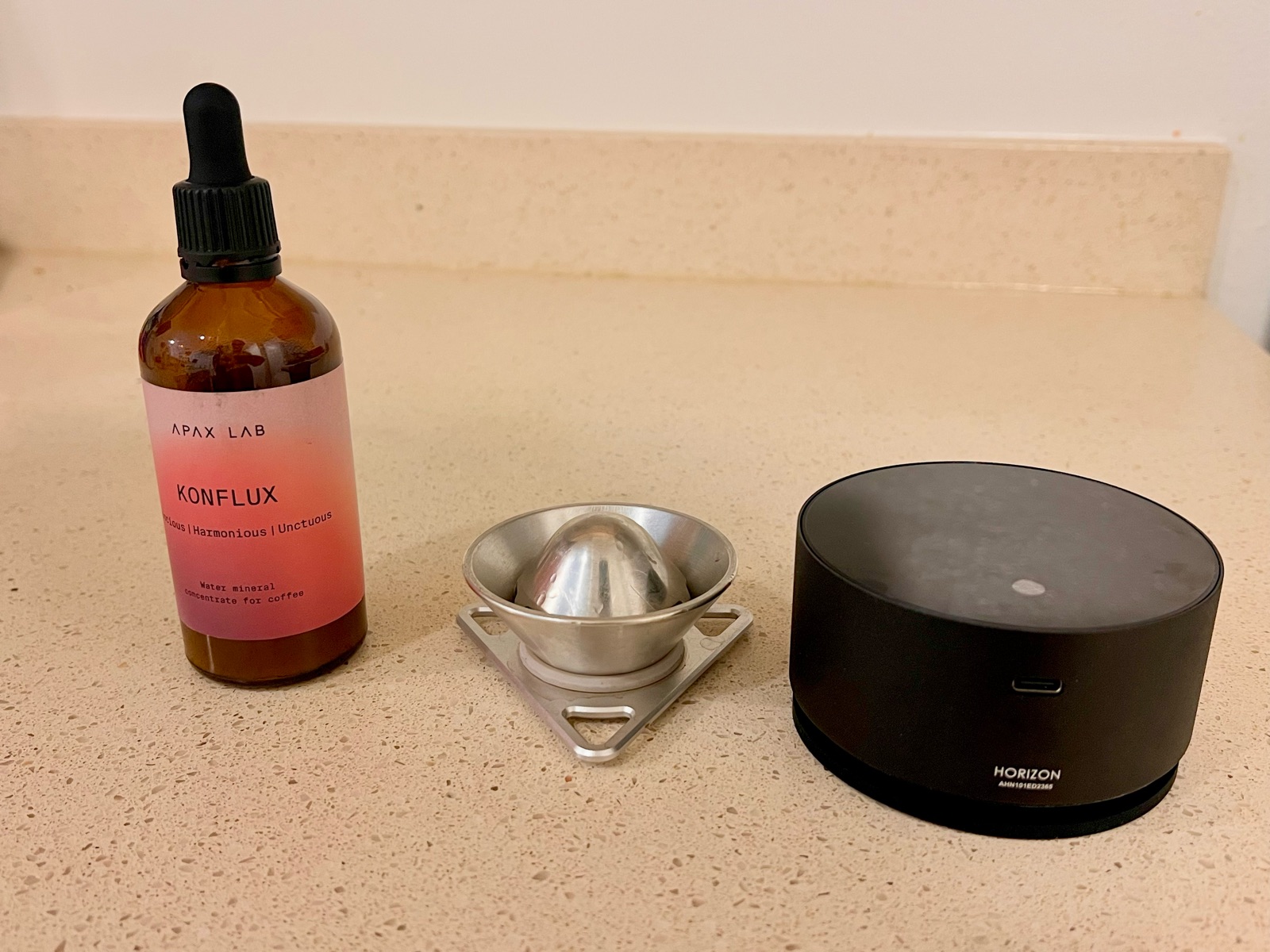
The three treatments
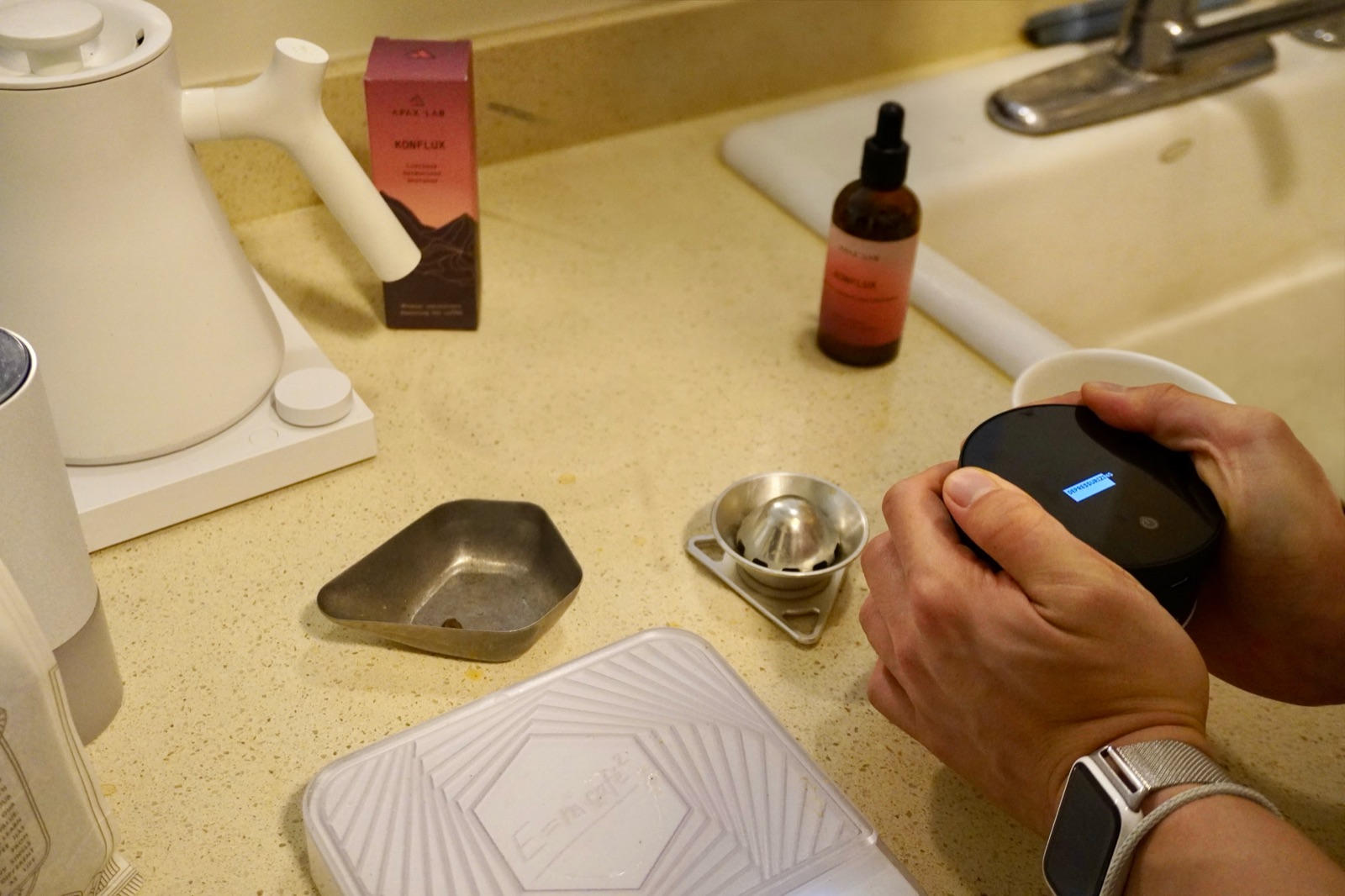
- Acaia Horizon (V, for vacuum). A puck-shaped device that sits on the rim of the cup and pumps air out of the space above the coffee. In our procedure it normally brought the cup to around −0.5 bar, and we held it there for 10 seconds before releasing.
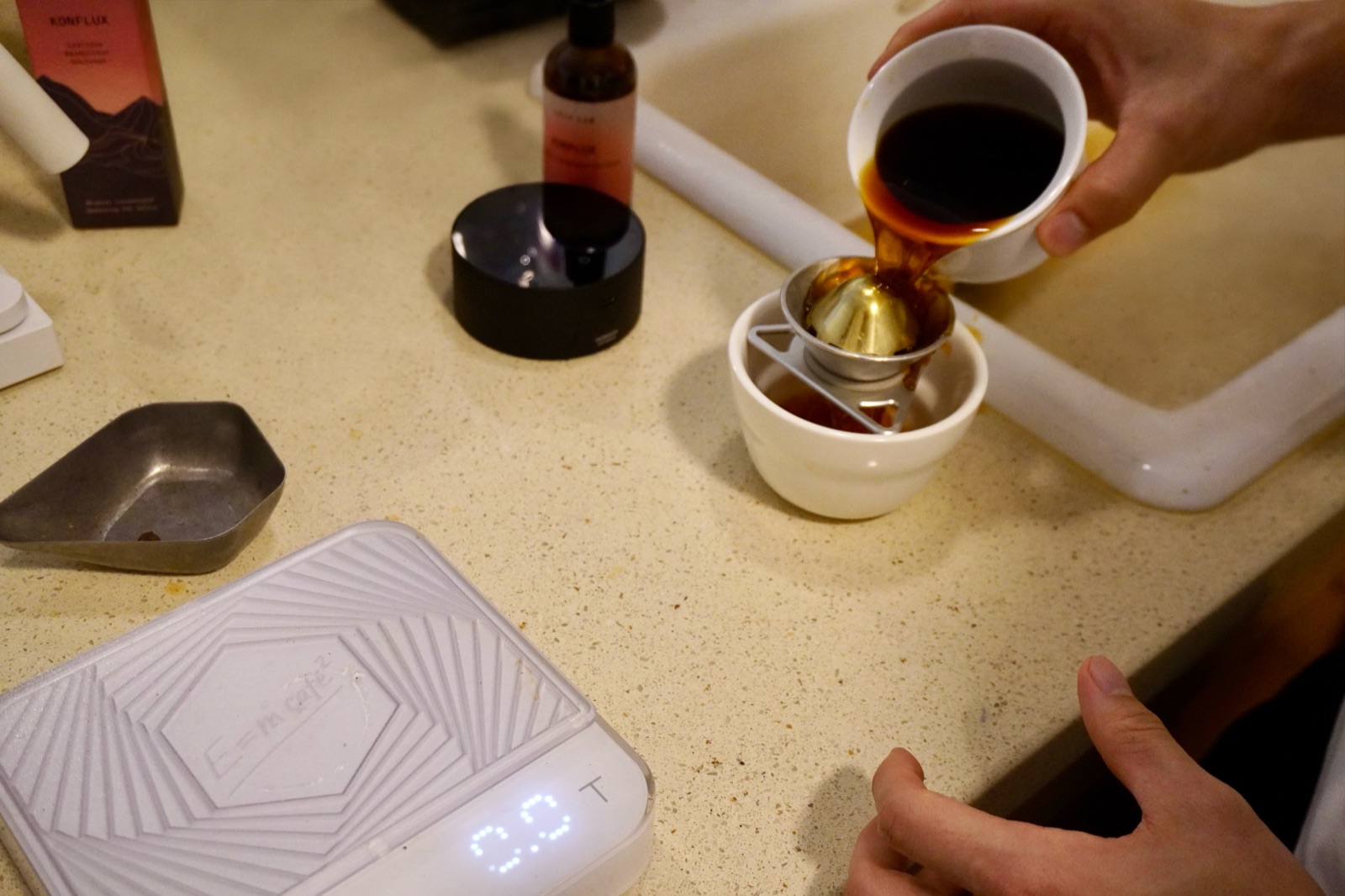
- Apax Lab Konflux (A). A mineral concentrate from Apax Lab, added by the drop straight into the brewed cup. It is sold as a way to improve mouthfeel, structure, and balance.
- Tin ball (T). A tin ball that sits in a small stand. The brewed coffee is poured over it on its way into the cup.
All three act on the finished brew, so every cup can be brewed the same way and only what happens afterwards changes.
The experiment
Each treatment is either applied or not, which gives 2 × 2 × 2 = 8 combinations: none, V, A, T, V+A, V+T, A+T, and V+A+T. We brewed all eight on each of two days, 16 brews in total. Every treatment is then judged on all 16 cups, the 8 with it against the 8 without.
There were three of us. I did the brewing and the post-brew treatments. The other two tasted every cup without knowing which combination was in it: each cup reached them labeled only with a three-digit code.
Neither taster has professional cupping or tasting experience, so I only asked them to grade aroma, sourness, and bitterness, each from 0 to 10. Sweetness, texture, and other attributes were left out. For each brew we averaged the two tasters’ scores.
Controlling confounders
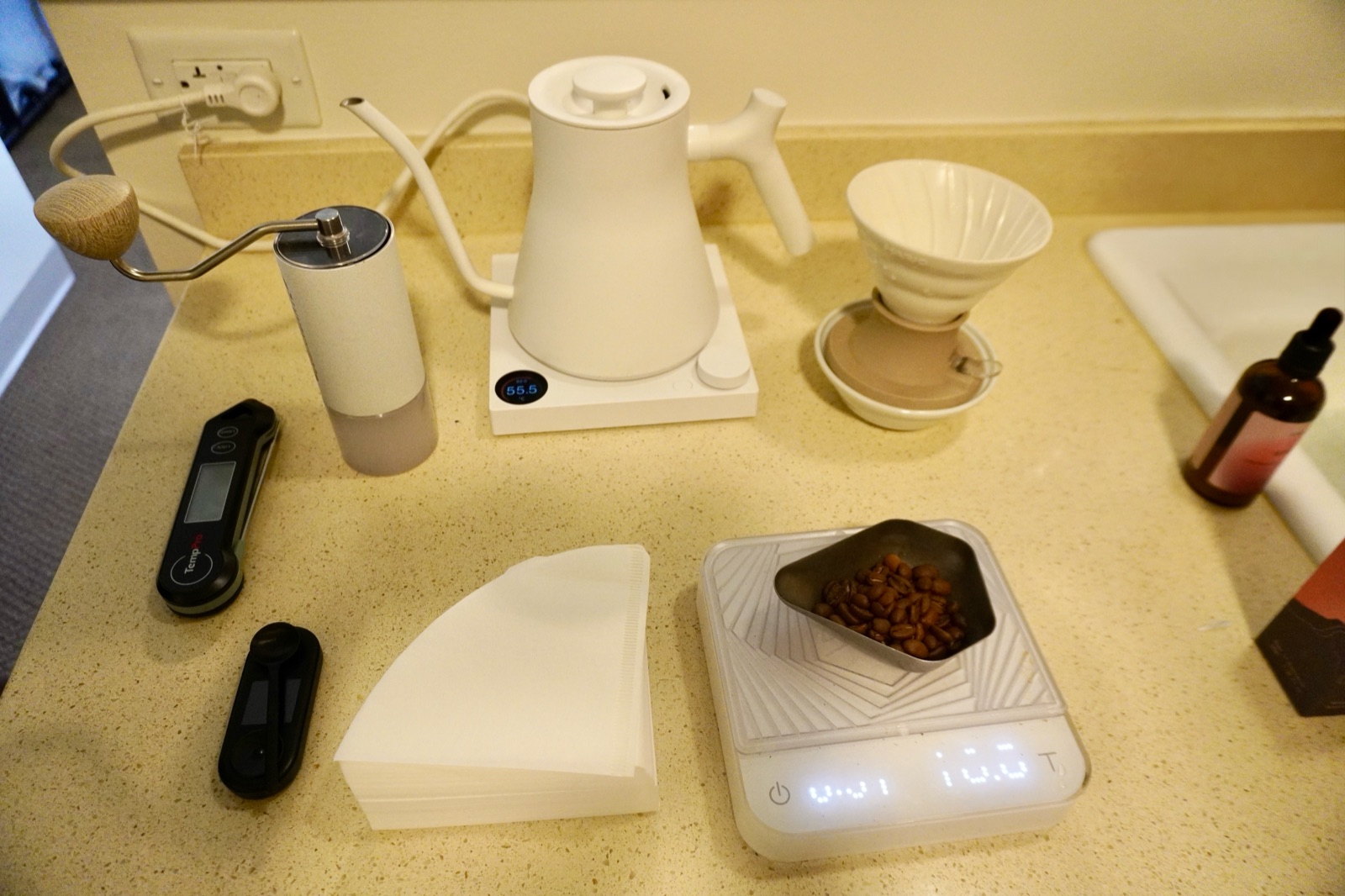
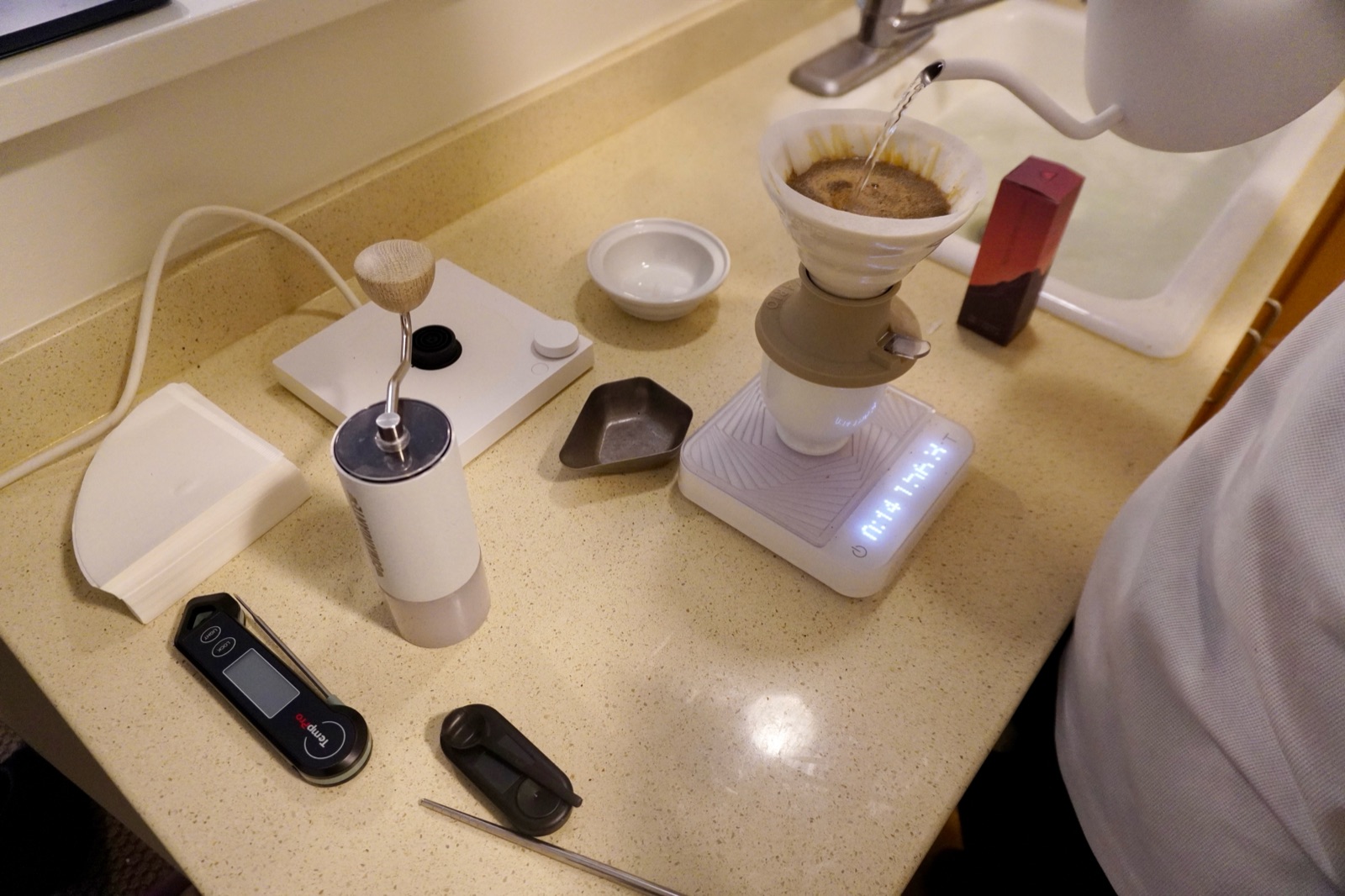
To keep everything except the treatments the same, every cup followed one recipe:
- Grinder: Comandante C40 at 15 clicks, slightly finer than a cupping grind
- Dose: 16 g of coffee to 240 g of water
- Water: purified, at 92 °C
- Brewer: Hario V60 Switch
- Pour: all 240 g in a single pour, switch released at 1:00, drawdown finished by about 1:50
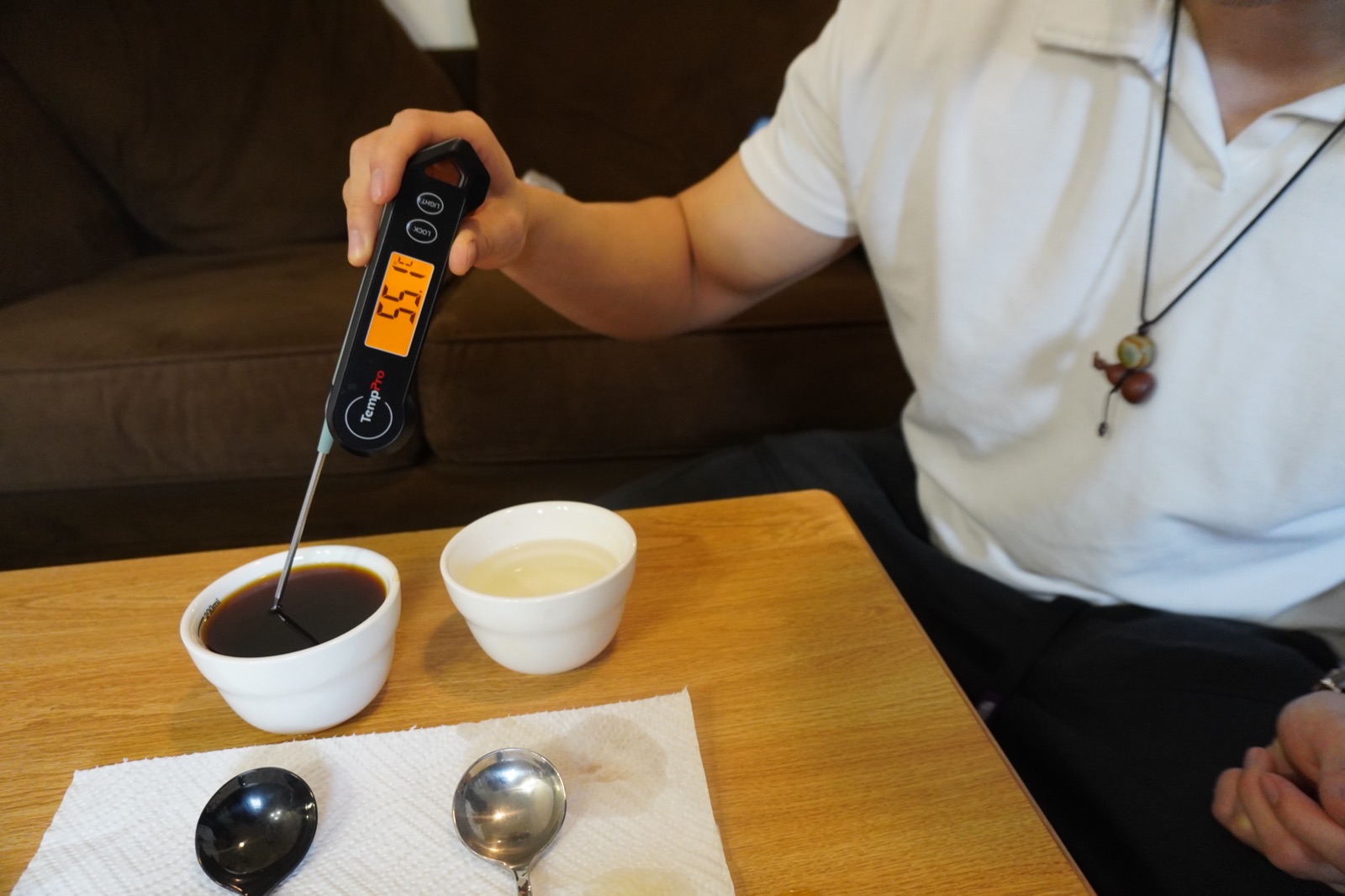
- Tasting: only once the cup had cooled to 55 °C
I also measured the TDS of every finished cup, after its treatment, with a DiFluid refractometer. Those numbers are for reference only: the DiFluid’s readings are not really accurate, and my VST refractometer was back in my hometown, where I had forgotten it.
Results
Only the tin ball had a significant effect. With the ball, average sourness fell from 5.94 to 4.69, a drop of 1.25 points on the 0–10 scale (95% CI −2.34 to −0.16, p = 0.030). The Horizon and Konflux had no significant effect on aroma, sourness, or bitterness.
- Horizon0.00 · p = 1.000
- Konflux−0.50 · p = 0.068
- Tin ball+0.38 · p = 0.149
- Horizon+0.38 · p = 0.442
- Konflux−0.50 · p = 0.314
- Tin ball−1.25 · p = 0.030
- Horizon+0.13 · p = 0.699
- Konflux+0.25 · p = 0.446
- Tin ball0.00 · p = 1.000
The full table of effects, with interactions and TDS:
| Effect | Aroma | Sourness | Bitterness | TDS (%) |
|---|---|---|---|---|
| Horizon (V) | 0.00 (1.000) | +0.38 (0.442) | +0.13 (0.699) | +0.035 (0.398) |
| Konflux (A) | −0.50 (0.068) | −0.50 (0.314) | +0.25 (0.446) | −0.003 (0.950) |
| Tin ball (T) | +0.38 (0.149) | −1.25 (0.030) | 0.00 (1.000) | −0.078 (0.086) |
| V × A | +0.38 (0.149) | −0.75 (0.147) | +0.50 (0.151) | 0.000 (1.000) |
| V × T | 0.00 (1.000) | +0.25 (0.604) | −0.25 (0.446) | −0.010 (0.804) |
| A × T | +0.25 (0.316) | −0.13 (0.794) | +0.38 (0.265) | +0.018 (0.666) |
| V × A × T | +0.63 (0.031) | −0.13 (0.794) | −0.13 (0.699) | −0.025 (0.540) |
| Needed for p < 0.05 | ±0.55 | ±1.09 | ±0.73 | ±0.092 |
Each cell shows how much a treatment changed that score, with its p value in parentheses. Bold means p < 0.05, and the last row shows how big a change had to be to count.
Besides the tin ball, one more cell is bold: all three treatments together on aroma. None of the three changed aroma on its own, so we think that one is just chance. We are also a little careful about the tin ball result, because most of it came from one of the two tasters.
Even so, we are not completely ruling out the Horizon and Konflux. The fact that they did not make a clear difference here probably says more about our small experiment than about the products themselves.
For one thing, our tasters are not trained cuppers. That is why I only asked them to score aroma, sourness, and bitterness. Nobody scored sweetness, texture, or anything else, so if a treatment changes those, we simply would not have noticed. Konflux, for example, is sold on mouthfeel.
I also brewed every cup by hand. Even with the same recipe each time, no two of my pours come out exactly alike, and that makes the cups harder to compare fairly. Ideally every cup would come from an automatic pour-over machine like the xBloom.
So the tin ball is the only one that clearly changed the coffee for us, by making it taste less sour. The other two are still open questions.
Thanks to my two teammates for tasting all sixteen cups blind.